Friday, 12 June
All day events take place in Run Run Shaw Creative Media Centre (CMC).
8:00-9:00
Registration
📌 CMC 5F Open Area
9:00-9:30
Welcome
📌 CMC M5050 (Chow Sang Sang Lecture Theatre)
Christoph A. HAFNER, City University of Hong Kong, Hong Kong
Bi-qi Beatrice LEI, ASA
9:30-10:30
Keynote Speech 1
📌 CMC M5050 (Chow Sang Sang Lecture Theatre)
“Come idhar”: “Tradapting” Shakespeare in Much Ado About Nothing (2012)
Sujata IYENGAR, University of Georgia, USA
Host: Reto Thomas Edgar WINCKLER, City University of Hong Kong, Hong Kong
10:30-11:00
Coffee Break
📌 CMC 5F Open Area
11:00-12:40
Panel 1: Shakespeare in the Digital Era
📌 CMC M4001
Chair: YONG Li Lan, National University of Singapore, Singapore
“Words, words, words”—Questioning Gen-AI “Shakespeare” When Preparing Hong Kong DSE Students for Diploma of Secondary Education Literature in English
Tanya KEMPSTON, University of Hong Kong, Hong Kong
Animating Shakespeare in Complex Setting with AI
Hannes RALL, Nanyang Technological University, Singapore
Alice OSINSKA, Nanyang Technological University, Singapore
Swipe Right on Shakespeare: Renegotiating Authority in Romeo VS. Juliet
Danica STOJANOVIC-SCHAFFRATH, University of Graz, Austria
Panel 2: Shakespeare in Classroom and Community
📌 CMC M4003
Chair: LEE Hyon-u, Soon Chun Hyang University, South Korea
Teaching Shakespeare through Space, Place, and Movement: A Psychogeographical Approach
Mohd Fadhli Shah KHAIDZIR, Universiti Kebangsaan Malaysia, Malaysia
Mafarhanatul Akmal Ahmad KAMAL, Universiti Teknologi MARA, Malaysia
“Are you a man?” Developing a Shakespearean Educational Framework to Address the Crisis of Masculinity
Nahum WELANG, Nord University, Norway
Shakespeare and Medical Education in Malaysia
KOK Su Mei, University of Malaya, Malaysia
“A local habitation and a name”: Directing University Productions of Shakespeare in Hong Kong
Kristen MURRAY, University of Hong Kong, Hong Kong
Panel 3: Popular Shakespeares
📌 CMC M4004
Chair: YOSHIHARA Yukari, University of Tsukuba, Japan
Shakespeare in Manga: A Comparative Analysis of Chinese and Japanese Adaptations
MA Yujing, Soka University, Japan
Structures of Power and Suppressed Violence: The Tempest and the 2022 Japanese Anime The Witch from Mercury
KOIZUMI Yuto, Institute of Science Tokyo, Japan
The Bard in Chat with Gen-Z: Rewriting Shakespeare from Fanfic to Meme Culture
Akhya SHANKAR, University of Delhi, India
Picturing Shakespeare: Theatricality and Visual Narrative in 1980s Chinese Lianhuanhua Adaptations
CHEN Shuying, Shanghai University, China
Panel 4: Remaking Hamlet and Hamnet
📌 CMC M4051
Chair: Sujata IYENGAR, University of Georgia, USA
Bodies of Ethnicity in Tibetan Hamlet
CHEN Shuangting, University of Warwick, UK
“Come, a passionate speech”: Hamlet in Yemeni Arabic, in Post-colonial Aden
Katherine HENNESSEY, Wenzhou-Kean University, China
Adapting a Poetics of Grief in Chloé Zhao’s Hamnet (2025)
Ffion Rose Mary DAVIES, Hong Kong Shue Yan University, Hong Kong
12:40-13:40
Lunch
📌 CMC M9001
13:40-15:00
Panel 5: Shakespeare on Screen
📌 CMC M4001
Chair: Mark Thornton BURNETT, Queen’s University Belfast, UK
A Digital Window into Postcolonial Shakespeare: Tracing Indian Film Adaptations
Rosa GARCÍA-PERIAGO, University of Murcia, Spain
Shakespeare in Philippine Teleseryes
Xelestine Gabriel C. PAYTE, University of Asia and the Pacific, Philippines
Panel 6: Economy, Politics, and Law
📌 CMC M4003
Chair: Julian LAMB, University of Wollongong, Australia
Macbeth Mise-en-Abyme: Victorian Spectatorship and Politics
Ian Harvey A. CLAROS, Ateneo de Manila University, Philippines
“The Law, Not I”: Judgement, Responsibility, and the Personification of Law in Measure for Measure
Matthew C. STEPHENSON, Harvard Law School, USA
Marriage Diplomacy and Fosterage Alliance in Shakespeare’s Tempest
NG Su Fang, Virginia Tech, USA
Panel 7: Posthuman Portals and Pathways in the Anthropocenic Shakespeares
📌 CMC M4004
Chair: Mika EGLINTON, Kobe University of Foreign Studies, Japan
Disease, Infection, and Olfaction in The Tempest’s Posthuman Environment
HIRONO Masaki, Aichi University, Japan
Shakespeare’s Forestal Poetics and Politics
Ted MOTOHASHI, Tokyo University of Economics, Japan
The Posthuman Soundscape in Twelfth Night
SAKAMOTO Kohei, Kyoto University, Japan
Panel 8: National(ist) Shakespeares
📌 CMC M4051
Chair: KOK Su Mei, University of Malaya, Malaysia
What We Talk About When We Talk About Korean Shakespeare
Scott SHEPHERD, Chongshin University, South Korea
War’s Afterlives as Portals of Identity: Trauma, Memory, and Nationhood in Shakespeare’s Henry V
Alice GONG, University of Edinburgh, UK
“Alas, poor country, almost afraid to know itself.”: Balkrishna Sama’s Nepali Adaptations
Andronicus ADEN, University of Calcutta, India
15:00-15:30
Coffee Break
📌 CMC 5F Open Area
15:30-16:50
Symposium 1: Cinematic, Digital, and AI Shakespeare
📌 CMC M4001
Chair: Ffion Mary Rose DAVIES, Hong Kong Shue Yan University, Hong Kong
Authenticity of AI-Generated Shakespearean Texts and Artwork
CHAN Sumie, Chinese University of Hong Kong, Hong Kong
The Simulated Reality of Omkara in the Age of Algorithm
Sagnika DAS, St. Xavier’s University, India
The Dynamics of Delayed Action: The Existential Procrastination in Hamlet vs. the Political Necessity in Haider
Sreyasi DEY, St. Xavier’s University, India
Shakespeare Between Realities: King Lear, Mediated Subjectivity, and the Prophecy of the Digital Age
HE Hsu Heng Louie, China Medical University, Taiwan
HE Pei-rong Haley, National Sun Yat-sen University, Taiwan
Playing Shakespeare: Avatar Performance and Therapeutic Distance in the Metaverse Globe Theatre
LEE Hyon-u, Soon Chun Hyang University, South Korea
Aesthetics of Sovereignty: A Stage-to-Film Analysis of Macbeth (1606) and Throne of Blood (1957)
Anson M. C. SINN, Independent Scholar, Hong Kong
Nimmi versus Asaji: Lady Macbeth Two Versions on Screen
ZANG Xi He Paul, City University of Hong Kong, Hong Kong
Symposium 2: Referencing Shakespeare
📌 CMC M4003
Chair: Rebekah BALE, Hong Kong Shue Yan University, Hong Kong
From Cento, to Sonnet 18 to Straight Lift: Shakespearean Intertextuality in the Modern Sonnet
Andrew BARKER, Independent, Hong Kong
(Re)Locating Shakespeare’s Women in Philippine Pop Fiction
Neal Amandus GELLACO, University of the Philippines Diliman, Philippines
Folios to Feed: Shakespearean Memes from India as Sites of Translocational Paratextuality
Jorlin JOSE, Indian Institute of Space Science and Technology, India
Nomadic Soliloquies: Intercultural and Intermedial Dialogue in Chloé Zhao’s Nomadland and the Shakespearean Tradition
TANG Jinli, Guangzhou University, China
Password and Mask: On the Public Dissemination and Community Preservation of the “Shakespeare’s Sister” Meme
XIAO Yifu, Guangzhou University, China
Symposium 3: Shakespeare and Popular Culture
📌 CMC M4004
Chair: MA Yujing, Soka University, Japan
Staging Shakespeare in K-Pop: Transcultural Adaptation and Gender Performance in ONEUS’s “Be Mine”
Nayoung BISHOFF, George Washington University, USA
When the Bard Meets the Barrio: Shakespearean Traces in Nick Joaquin’s Pop Stories for Groovy Kids (1979)
Juliana Maria ODOÑO, University of Asia & the Pacific, Philippines
Deference to Death: Temporality and Love in Clara Benin’s “Dust” and Shakespeare’s Sonnet 73
Gino PINGA, University of Asia and the Pacific, Philippines
A Transcultural Reimagination of the Monstrous in a Japanese-Reimagined England: Shakespeare’s Richard III in Shōjo Manga
Joan Mary Flordeliz L. RAYOS, University of the Philippines Diliman, Philippines
Shakespeare as Character: Cultural Heritage Transmission in English KS2: Shakespeare Retold
YANG Tiantong Cathy, Shandong University, China
Errenzhuan Romeo and Juliet: Migrant Histories and Grassroots Cultural Politics in North-east China
YIN Yuanwei, Queen’s University Belfast, UK
16:50-18:50
Welcome Reception
📌 M9001
20:00-
Performance: Hamlet
Tibet Autonomous Region Drama Troupe, China
📌 The Box, Freespace, WestK
Performance: Shakespeare Dance Theatre
Planting Shakespeare
China
We Are (Not) Romeo and Juliet
Hong Kong
📌 The Room, Freespace, WestK
Saturday, 13 June
9:00-9:30
Graphic Shakespeare Competition Award Ceremony
📌 CMC M5050 (Chow Sang Sang Lecture Theatre)
YOSHIHARA Yukari, University of Tsukuba, Japan
9:30-10:30
Keynote Speech 2: Caliban’s Other Eden
📌 CMC M5050 (Chow Sang Sang Lecture Theatre)
SHEN Lin, Central Academy of Drama, China
Host: Bi-qi Beatrice LEI, ASA
10:30-11:00
Coffee Break
📌 CMC 5F Open Area
11:00-12:40
Panel 9: Unsex Me Here
📌 CMC M4001
Chair: Judy Celine ICK, University of the Philippines Diliman, Philippines
From Lady Macbeth to “She-Macbeth”—A Study of the Change of Women’s Self-identification on the Contemporary Stages of China
ZHU Ning, Central Academy of Drama, China
Lady Macbeth Between Worlds: Cultural Re-inscriptions in Maqbool and Mandaar
Ankita DAS, Bennett University, Greater Noida, India
Sanjana SANTRA, Bennett University, Greater Noida, India
A Pilgrimage of the Imagination: The Pretence of All’s Well That Ends Well, a Prescient Play about the Modern Age
Bruce G. SHAPIRO, Queensland University of Technology, Australia
Silence: Between Worlds (and Genders)
Nicholas LUKE, University of Hong Kong, Hong Kong
Panel 10: Genres
📌 CMC M4003
Chair: Jason GLECKMAN, Chinese University of Hong Kong, Hong Kong
Metamorphosis and the Theatrical Imagination: Reconfiguring Genre in A Midsummer Night’s Dream
CHEN Lin, Shandong University, China
Localising Shakespeare in Ballet: A Case Study of the Hong Kong Ballet’s Production of Romeo+Juliet
Jolie LUM, Chinese University of Hong Kong, Hong Kong
Shakespeare’s Transformation of Aristotle’s Concept of Tragedy
Kay Malte BISCHOF, University of Jerusalem, Israel
Portals of Passion and Pop: Navigating Gender and Genre in the Taipei Staging of Roméo & Juliette, les enfants de Vérone
Iris H. TUAN, National Yang Ming Chiao Tung University, Taiwan
Panel 11: Cross-Cultural Adaptations
📌 CMC M4004
Chair: Roweena YIP, National University of Singapore, Singapore
Cultural Frames and Gendered Voices: Adapting Tales from Shakespeare in Early Twentieth-Century China
NUI Shuo Jasmine, University of York, UK
Performing Shakespeare through Indian Folk Traditions
Santanu DAS, Rabindra Bharati University, India
Caesar Must Die, and Jingju Too?: Intermediality, World Theatre, and Contemporary Legend Theatre’s Caesar’s Maze
FENG Wei, Shandong University, China
Panel 12: Rewriting Shakespeare, Shakespearean Rewriting
📌 CMC M4051
Chair: Jason Eng Hun LEE, Hong Kong Baptist University, Hong Kong
“Thou Art Weighed and Art Found Wanting”: Two Performative Chinese Translations of Measure for Measure
ZHU Ying Julia, Macao Polytechnic University, Macao
Fate, Fiends and Fixes: Issues of Agency in Novelizations of Macbeth
Rebekah BALE, Hong Kong Shue Yan University, Hong Kong
Shakespeare’s Influence on Jin Yong: An Overview
Jonathan HUI, City University of Hong Kong, Hong Kong
12:40-13:40
Lunch
📌 CMC M9001
13:40-15:20
Panel 13: Language and Rhetoric
📌 CMC M4001
Chair: Scott SHEPHERD, Chongshin University, South Korea
The Dotive: Infelicity in Antony and Cleopatra
Julian LAMB, University of Wollongong, Australia
Expressing Fear in the Kunqu Macbeth: Intercultural Shakespeare and the Language of Gesture
David NEE, Louisiana State University, USA
Lost Paths and Silent Speeches: Rhetorical Unravelling in A Midsummer Night’s Dream
Laura Iseppi DE FILIPPIS, Xi’an International Studies University, China
Homosocial Love in Shakespeare’s Procreation Sonnets
Jason GLECKMAN, Chinese University of Hong Kong, Hong Kong
Panel 14: Positioning Shakespeare
📌 CMC M4003
Chair: SHEN Lin, Central Academy of Drama, China
From Desdemona to “Bad Girl” Sonia: Navigating Cold War Post-coloniality in Korea
KO Yu Jin, Wellesley College, USA
Social Mobility or Baggage? Shakespeare in Asian America
Daphne P. LEI, University of California, Irvine, USA
Autonomy and Dependency: Shakespearean Adaptations / Hong Kong Cinemas
Mark Thornton BURNETT, Queen’s University Belfast, UK
Othello and the Gendered Conditions of Femicide
Majid SARNAYZADEH, Independent Scholar, Iran/UAE
Panel 15: Staging Shakespeare
📌 CMC M4004
Chair: SU Tsu-Chung, National Taiwan Normal University, Taiwan
Performing Shakespeare in the Postcolonial India
Monalisa DAS, Kazi Nazrul University, India
Santanu DAS, Rabindra Bharati University, India
Shakespeare’s Props and the Arrangement of Temporal Portals
Natallia ZELIAZINSKAYA, Belarusian State University, Belarus
“Wives may be merry and yet honest too” … What a Pedagogical Performance of The Merry Wives of Windsor Continues to Teach Us
Poonam TRIVEDI, University of Delhi, India
Experiencing Shakespeare
David BOOTH, Hong Kong Chu Hai College, Hong Kong
Panel 16: Developing Collaborative and Comparative Research in Asian Shakespeare
📌 CMC M4051
Chair: LIM Eng Hui Alvin, National University of Singapore, Singapore
E/Aku (Ugliness) as Disgust and Abnormality: The Interplay of Feelings and Forms in Two Richard IIIs
XU Caifang, National University of Singapore, Singapore
Spirits Have No Feet: Annotation, Shared Knowledge, and Compared Knowledge
Jessica CHIBA, Shakespeare Institute, University of Birmingham, UK
“Seeing In Between”: Through Collaborative Annotations in Young Asian Shakespeares
HWANG Ha Young, Korea National University of Arts, South Korea
On Affect and Female Presence in Three King Lears
Roweena YIP, National University of Singapore, Singapore
15:20-15:50
Coffee Break
📌 CMC 5F Open Area
15:50-17:30
Symposium 4: Translating and Teaching Shakespeare
📌 CMC M4001
Chair: Jessica CHIBA, Shakespeare Institute, UK
10 Minutes to Save the Bard: Performance as a Prerequisite to Shakespeare Pedagogy in the Philippines
Jaime BENITEZ, University of Asia and the Pacific, Philippines
Translatability or Untranslatability?—On Translation of Puns and Its Influence on Stage Performance in Shakespeare Drama
DAI Danni, Wuhan University, China
The Future of Shakespeare in Malaysian Language Education: Reinventing Hopes and Avenues through Technological-Based Pedagogies
Hanita Hanim ISMAIL, Universiti Kebangsaan Malaysia, Malaysia
Wordplay and Euphuism in Japanese Translations of Love’s Labour’s Lost
MIYAKE Yuriko, Kwansei Gakuin University, Japan
Compact Shakespeare: Stumbling Onto Stage with Ten-Minute Abridgments
Joachim Emilio B. ANTONIO, University of Asia and the Pacific, Philippines
The Politics of Reading Hindi Translations of Shakespeare
Anandi RAO, SOAS, University of London, UK
Close Reading, Project-Based Presentation, & Performance-Oriented Pedagogy: Balancing Textual Analysis with Theatrical Practice in the Classroom
SU Tsu-Chung, National Taiwan Normal University, Taiwan
The Evolution of Early Chinese Translations of The Merchant of Venice (1903–1947)
WANG Rui, Northwestern Polytechnical University, China
Symposium 5: Women / Gender
📌 CMC M4003
Chair: Poonam TRIVEDI, University of Delhi, India
The Courageous and the Resilient: George Sand’s Rewriting of Gertrude and Ophelia in the Novel L’Homme de Neige
Irene CHAN, National Chengchi University, Taiwan
Stalled Agency and Feminist Nightmares: Yamanote Jijosha’s Meta-Theatrical Othello and Macbeth
Mika EGLINTON, Kobe University of Foreign Studies, Japan
Womanhood & Femininity: How Maqbool’s Nimmi Deepens the Understanding of Lady Macbeth
Richelle Gaille Baniago GABUCAN, City University of Hong Kong, Hong Kong
Shakespearean Actress Charlotte Cushman and Fan Culture
MIYAMOTO Maira, University of Tsukuba, Japan
The Queen and the Tyrant: Liberty of Speech in Shakespeare’s The Winter’s Tale, 1.2
John MUCCIOLO, Independent Scholar, USA
Ophelia’s Chronographic Trauma Since Saint Valentine’s Day
Ramji YADAV, B. M.University, Rohtak, Haryana, India
Nancy YADAV, Galghotias University, Noida, India
Symposium 6: Intercultural Shakespeare
📌 CMC M4004
Chair: Daphne P. LEI, University of California, Irvine, USA
Maqbool‘s Secularization and Humanization of Macbeth‘s Witches
Julian Steven Anthony AMERINE, City University of Hong Kong, Hong Kong
Bengali Hamlet (2017) from an Islamic Perspective
Diana ANSAREY, International Islamic University, Malaysia
Performing the Global: Hybridized Subjectivities in Yohangza’s The Two Gentlemen of Verona
KIM Hee-Young, Seoul National University, South Korea
Decolonial Pathways: Crip Time in Postcolonial Indian King Lear Adaptations
Kibria NASIR, Shakespeare Institute, UK
Exotic Worlds at the Capulet Family’s Feasts: Origins and Uses of Imported Ingredients in Romeo and Juliet
OKUYAMA Atsuko, Nagoya University, Japan
The Century-Old Comparative Reflection on Chinese Classical Drama and Shakespeare’s Plays
LI Weifang, Henan University, China
Adapting Shakespeare in an “Aesthetic State of Exception”: Li Jianwu’s Intercultural Reconfiguration of Wartime Experience and Cultural Tradition in Wang Deming
LIU Qingru, Shanghai International Studies University, China
Regionalising Shakespeare: The Hybrid Afterlives of Shakespeare in Indian Theatre
Arpita MITRA, Tilka Manjhi Bhagalpur University, India
Symposium 7: Interpreting Shakespeare
📌 CMC M4051
Chair: Ted MOTOHASHI, Tokyo University of Economics, Japan
Nietzsche’s Interpretation of Hamlet as a Case Study in Cross-Cultural Practice
HUANG Qingyi, Zhejiang University, China
Networks: Relationships, Structures, Capital, Exchange
JUN Eunsun, Ewha Womans University, South Korea
Nearing Nothing: Negative Creation in the Tragedies of Shakespeare
Yuval LUBIN, Hebrew University of Jerusalem, Israel
Rephrasing Justice: Shakespeare’s Intercultural Recasting of Plato’s Republic in The Tempest
Utsav MALANI, Krantiguru Shyamji Krishna Verma Kachchh University, India
The Narrative Vaccine: Reflections of Plague in William Shakespeare’s Richard III and Macbeth
Mala RENGANATHAN, North-Eastern Hill University, Shillong, India
“I wasted time, and now doth time waste me”: Feeling Time in Richard II
YAN Yuhong, Shakespeare Institute, UK
“The chink of a wall”: Partition and Reconciliation in A Midsummer Night’s Dream
WU Yarong, Anhui University, China
Confounded and Division: A Preliminary Study on Shakespeare’s Conception of Rationality
ZHU Tianqi, Communication University of China, China
20:00-
Performance: Hamlet
Tibet Autonomous Region Drama Troupe, China
📌 The Box, Freespace, WestK
Performance: Ophelia, An Object Study
Ewa KACZMAREK, Poland
📌 Studio 1, Xiqu Centre, WestK
Performance: Shakespeare Dance Theatre
Planting Shakespeare
China
We Are (Not) Romeo and Juliet
Hong Kong
📌 The Room, Freespace, WestK

 Studio 1, Xiqu Centre, WestK
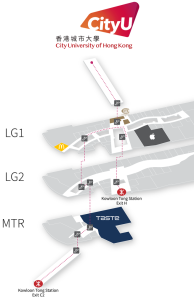 CityUHK is located adjacent to MTR Kowloon Tong Station, which is served by the East Rail Line (Light Blue) and the Kwun Tong Line (Green). Use Exit C (Festival Walk), and it is just a 5-minute walk from MTR station via Festival Walk to the Campus. Click here for detailed instructions.