
 Sujata Iyengar, University of Georgia, USA
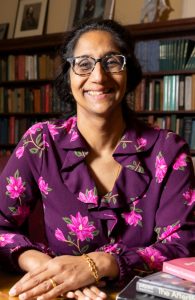
Sujata Iyengar, Distinguished Research Professor of English at the University of Georgia, specializes in Shakespearean adaptation and appropriation, early modern literature, and the global afterlives of Shakespearean texts. Her books include Shades of Difference (2004), Shakespeare’s Medical Language (2011), Shakespeare and Global Appropriation (2020, with Miriam Jacobson and the late Christy Desmet) and Shakespeare and Adaptation Theory (2023) alongside extensive editorial leadership as co-founder and co-general editor (with Christy Desmet) of Borrowers and Lenders: The Journal of Shakespeare and Appropriation. A long-time advocate of cross-cultural and intermedial approaches to Shakespeare, she has collaborated internationally through major grants and partnerships, including multi-year projects linking scholars across continents. She is currently working on a monograph about Shakespeare and artists’ books and editing Much Ado About Nothing for the Arden Shakespeare, fourth series.
“Come idhar”: “Tradapting” Shakespeare in Much Ado About Nothing (2012)
My talk will ask to what extent it might be fruitful to consider Iqbal Khan’s RSC production of Much Ado About Nothing (2012) as a “tradaptation,” a portmanteau word coined by Québécois (joual) playwright Michel Garneau in the 1990s to connote a version of a script that self-consciously fuses adaptation and translation (or adaptation through translation) for postcolonial and intercultural goals. Set in twenty-first century Delhi and starring a cast of British Asian actors, this widely anticipated production both celebrated and exoticized its Indian setting through its sumptuous set and music. At the same time, it was widely panned by critics, in part because of the controversial use of mixed Hindi and English (“Hinglish”) by the British-based but ethnically South Asian players, its penchant for vulgar comedy, and its intrusive use of technology. While some audience members found the very fact of an all-British-South Asian cast empowering, others found the actors’ put-on accents demeaning; some audience members walked out of early performances. At the same time, the British South Asian press and the two British South Asian scholars who have discussed the show found much to praise. I speculate that the importance of a language community, the ties of that community to a particular region in, to adapt Salman Rushdie’s phrase, the “imaginary homeland” and in the diaspora, and the broad perception of that diaspora within minority-majoritarian settings all affect how audience members both majority and minority respond to intercultural Shakespeare and investigate specific examples of Hinglish from the tradapted text.
 Shen Lin, Central Academy of Drama, China
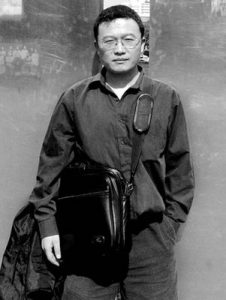
Shen Lin is a Professor at the Central Academy of Drama and Visiting Professor at China Academy of Art (Hangzhou). He earned his PhD from the Shakespeare Institute at University of Birmingham in the UK and completed a postdoctoral fellowship at Folger Shakespeare Library in the United States. He is the former Director of the Institute of Central Academy of Drama, and Executive Editor-in-Chief and President of Drama. He has held appointments as a visiting researcher and professor at University of California, University of Copenhagen, Charles University, Ilia State University, and Freie Universität Berlin. His research areas include Shakespeare and intercultural drama. He has edited an eleven-volume translation series on contemporary theatre entitled New Insights Into Theatre. He was editor-in-chief of The Drama Journal for ten years. His stage works include Bootleg Faust, Che Guevara (in collaboration), Good Person of Beijing, and A Wulin Tale. He has contributed to programming and curating at Beijing People’s Art Theatre, National Theatre of Spoken Drama, International Theatre Showcase Beijing, Beijing Theatre Olympics, Beijing Fringe, Wuzhen Festival, and Aranya Festival.
Caliban’s Other Eden
Criticism of The Tempest has long been shaped by its preoccupation with the play’s ideological implications, frequently construing it as allegory, while textual scholarship, by reconstructing its original audience and tracing its source materials, has tended to classify it as a form of occasional drama. Contemporary performance, in turn, has developed along several distinct lines: one renders the play as dream-like fantasia; another foregrounds its spectacularity; a third reasserts an allegorical reading, as in the ceremonies of the 2012 London Olympics. Yet these critical and theatrical approaches alike elide the historically consequential colonial discourse embedded in the text. A reconsideration of the play in relation to its source materials suggests that The Tempest is neither primarily allegorical nor fantastical, but a topical drama that registers William Shakespeare’s engagement with the colonial controversies of the early seventeenth century.
 Tang Shu-wing, Tang Shu-wing Theatre Studio, Hong Kong
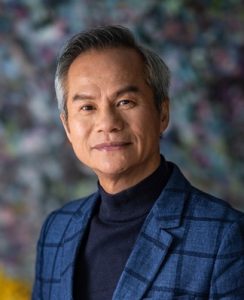
Born in Hong Kong, Tang is a theatre director, actor and educator, having worked in professional theatre for 30 years. He has done more than 60 works, including spoken drama, non-verbal theatre, dance drama and opera. Tang is hailed by the media as “one of the most important theatre directors in Hong Kong”. Minimalist aesthetics and physical theatre that Tang advocated have become a brand of contemporary theatre in Hong Kong. To acknowledge his achievement in past decades, Tang was awarded a Medal of Honour by the Government of the HKSAR in 2020, the Award for Outstanding Contribution in Arts by the Hong Kong Arts Development Council in 2021, an Honorary Doctorate by HKAPA in 2022.
Tang studied laws in Hong Kong in early years; then he studied Theatre Studies in the Université de la Sorbonne Nouvelle in Paris. Tang founded No Man’s Land in 1997. Between 2004 and 2011, Tang worked in the Hong Kong Academy for Performing Arts and got promoted from Lecturer, to Senior Lecturer, Head of Directing and Playwriting and Dean of the School of Drama within 5 years.
In 2009, Tang founded Tang Shu-wing Theatre Studio, which aims to create cross-disciplinary and cross-cultural works, further promoting Hong Kong’s theatre to international stages. In 2011, he left the Academy and started to put great effort in training the next generation and cares for the public good through arts. In 2014, he established “PTI Professional Physical Theatre Youth Training Programme” and served as the Course Director/Curriculum Designer and Tutor.
He has served in a number of public bodies such as Leisure and Cultural Services Department, Consultation Panel of the West Kowloon Cultural District Authority, the Hong Kong Arts Development Council, Arts Programme Committee of Hong Kong Arts Centre and Hong Kong-Taiwan Cultural Co-operation Committee. He is currently an Artistic Advisor of Hong Kong Dance Company.
Staging Shakespeare in Contemporary Contexts
I will talk about how my Cantonese language productions Titus Andronicus, Macbeth and Othello reflect my body-centric minimalist aesthetic style, and how they have been influenced by Vsevolod Meyerhold, Bertolt Brecht, Antonin Artaud, Asian theatre, poor theatre, and my own spiritual practices. I will also give my observations on how my works have been received from a broader cultural framework both within Hong Kong and overseas. Finally, I will talk about my vision and future plans for the Hong Kong International Shakespeare Festival, which launched in 2024 and is now in its second edition, drawing from a variety of local, global, but especially Asian, contexts.